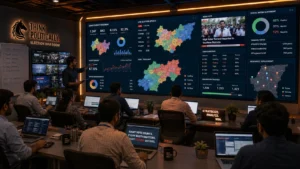
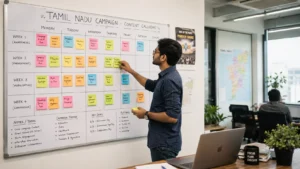
Our voter analysis service applies this segmentation framework to your specific constituency with primary survey data.
Voter Segmentation in Tamil Nadu: How Smart Campaigns Target the Right Voters
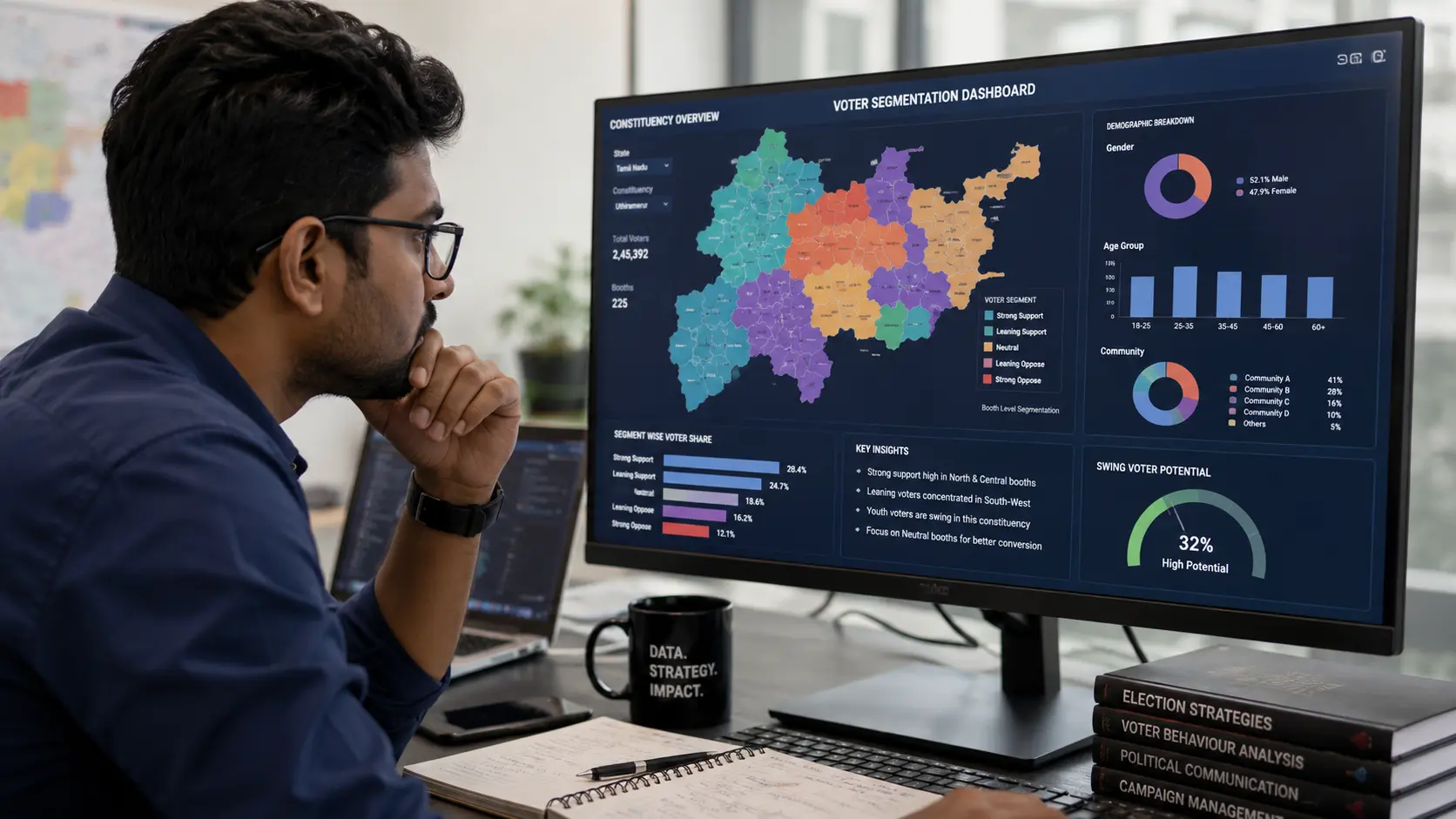
Tamil Nadu voter segmentation maps the constituency by community composition, past voting patterns, swing-voter concentration, and local issue intensity — giving campaigns a priority list of which voter groups to contact first and what message each segment responds to.
BJP manages at least 5 million WhatsApp groups across India for political messaging — and those groups aren’t random collections of supporters (Rest of World, 2024). They’re segmented by geography, caste, age group, and issue sensitivity. In the 2019 election, BJP deployed approximately 900,000 WhatsApp Pramukhs specifically tasked with managing segmented voter communication at booth level (Mozilla Foundation, 2024). The 2024 election went further: BJP’s Saral app collected individual voter profiles including name, address, age, gender, religion, caste, voter ID, and occupation — enabling communication targeted at the individual household level.
India had 968.8 million registered voters for the 2024 general election — the world’s largest electorate (Netmission, 2025). Tamil Nadu alone has 6.36 crore registered voters across 234 constituencies. No campaign can treat all of them the same and expect to win. Voter segmentation is how professional campaigns stop wasting resources on voters they can’t win and start concentrating firepower where it matters most.
Key Takeaways
- BJP runs 5 million+ WhatsApp groups segmented by geography, caste, and issue — managed by 900,000 dedicated WhatsApp Pramukhs (Rest of World / Mozilla Foundation, 2024).
- 43% of Indian respondents said social media influenced their voting decision in 2024; segmented digital targeting is now standard practice for major parties (survey data, 2025).
- Tamil Nadu has more female registered voters (3.24 crore) than male (3.12 crore) — women voters are the largest single segment in any Tamil Nadu campaign.
- The practical segmentation model for a constituency campaign: 5 primary segments (confirmed supporter through confirmed opposition), with 2–3 sub-segments by issue priority within swing voters.
What Is Voter Segmentation and Why Does It Matter in Tamil Nadu?
Voter segmentation is the process of dividing your registered voter list into groups based on shared characteristics and designing specific outreach for each group. Instead of one campaign message delivered identically to all 1.5 lakh voters in a Tamil Nadu assembly constituency, a segmented campaign designs different messages, different canvassing scripts, and different polling day mobilisation approaches for different voter groups.
The logic is simple: a 28-year-old first-time voter in an IT-sector job in Chennai cares about very different issues than a 55-year-old agricultural worker in rural Tirunelveli. A voter from a scheduled caste community whose welfare scheme entitlements haven’t been paid has a very different priority than a trader whose GST burden is her dominant concern. Sending both voters the same campaign message is not just inefficient — it actively fails to connect with either of them.
Tamil Nadu’s 43% of Indian voters who say social media influenced their vote (survey data, 2025) are reachable through segmented digital targeting on Facebook and YouTube. But the same principle applies to door-to-door canvassing, WhatsApp messaging, and public meeting content. Segmentation is a planning framework, not just a digital advertising tool. Our voter analysis service builds the segmentation database that makes every other campaign activity more effective.
How Do India’s Top Campaigns Build Voter Segmentation Databases?
The publicly available Electoral Roll is the foundation of every voter segmentation database in India. It contains: voter name, age, gender, address, and voter ID number for every registered voter. This is the starting point — but it’s not enough for meaningful segmentation because it doesn’t include caste, religion, occupation, or issue priority.
India’s major parties supplement the Electoral Roll through three additional data sources:
Door-to-Door Survey Data
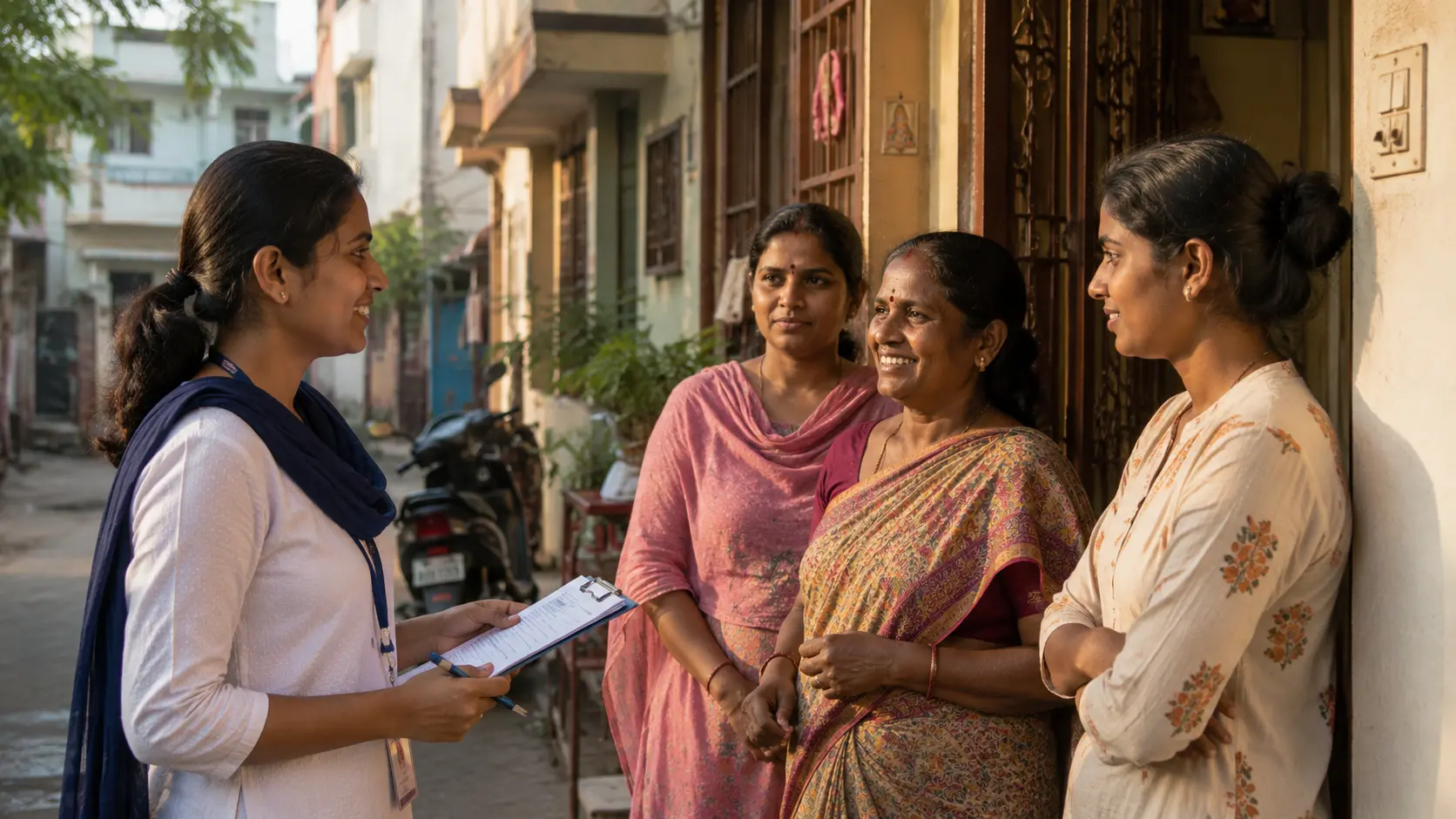
During canvassing, trained surveyors ask structured questions beyond voter sentiment: What is your main occupation? What is the most important problem in your area? Have you received [specific welfare scheme] benefits? These responses, recorded against the voter’s name in the Electoral Roll database, create a multi-dimensional voter profile. BJP’s Saral app enables exactly this — volunteers log survey responses against individual voter records at booth level (Rest of World, 2024).
Community Knowledge from Booth-Level Workers
Party workers who live in a booth area carry decades of community knowledge: which households belong to which caste community, which families have grievances against the incumbent government, which streets have unresolved infrastructure complaints. This informal knowledge, when systematically recorded against the voter list, adds a contextual layer no survey can replicate at scale.
Historical Voting Pattern Analysis
Past election results at booth level reveal which booths are reliable strongholds, which are competitive, and which are structurally opposition-leaning. A constituency-level campaign that knows its booth-by-booth win probability from previous cycles can allocate canvassing resources rationally rather than by gut feel. This is exactly what our political survey services produce — historical pattern analysis combined with current sentiment data.
The Five Core Voter Segments Every Tamil Nadu Campaign Must Track
Before any demographic sub-segmentation, every Tamil Nadu campaign needs a clean, consistently updated classification of every registered voter in the constituency into one of five sentiment categories:
- Confirmed Supporter (CS): Has voted for your candidate or party in two or more previous elections and has expressed support during this campaign. Canvassing goal: confirm they will vote on polling day; arrange transport if needed.
- Soft Supporter (SS): Leans toward your candidate but has not committed. Has expressed positive views during canvassing. Canvassing goal: make one more personal contact before polling day to solidify support.
- Undecided (UD): Has not expressed a clear preference. May be a first-time voter, a voter who split their previous votes, or a voter dominated by a local issue no candidate has adequately addressed. This segment is the highest-value canvassing target in any close contest.
- Soft Opposition (SO): Leans toward an opponent but could be moved by a strong local issue argument or a personal connection. Worth one canvassing contact with a targeted issue message — don’t invest heavy resources here.
- Confirmed Opposition (CO): Reliably votes against your candidate. Do not invest canvassing resources here. Focus your energy on the first three segments.
A practical benchmark from Tamil Nadu assembly campaigns: in most contested constituencies, approximately 30–35% of voters will fall in CS, 15–20% in SS, 20–25% in UD, 10–15% in SO, and 20–25% in CO. If your CS + SS total is below 45% of registered voters, you’re unlikely to win without significantly converting from the UD category. This benchmark helps campaigns understand their deficit before it’s too late to address it.
What Is Swing Voter Analysis in Indian Elections?
Swing voter analysis identifies the voters — and more usefully, the polling booths — whose support moved between recent elections or is genuinely undecided in the next one. In most Indian constituencies, only 25-35% of booths are truly in play; swing analysis finds them by comparing two cycles of booth-wise Form 20 results, then explains them through field verification and survey work.
The output feeds directly into segmentation: swing booths get the persuasion segments and revisit cycles below, strongholds get turnout maintenance, and hostile booths get minimal spend. The booth-classification method is covered step by step in our constituency assessment field manual, and the full data stack sits in our constituency analysis framework. Swing voter identification without booth history is guesswork; combined with it, segmentation becomes a targeting map.
Sub-Segmentation by Issue Priority: Reaching Undecided Voters in Tamil Nadu
Within the Undecided segment — the highest-priority canvassing target in any competitive constituency — sub-segmentation by dominant issue creates significantly more effective outreach than a generic swing-voter message.
Tamil Nadu’s undecided voters in recent election cycles cluster around four issue priorities:
- Infrastructure and daily life: Roads, water supply, electricity, drainage. Dominant in rural constituencies and urban local body elections. Response to: specific, evidence-based commitment to visible infrastructure problems.
- Employment and economic opportunity: Job availability for educated young people, agricultural income support, MSME business environment. Dominant in peri-urban and district headquarters constituencies. Response to: candidate’s track record on economic facilitation or specific policy positions.
- Welfare scheme delivery: Whether government benefits (Amma scheme, PM-KISAN, housing, NREGA) are actually being delivered in the voter’s area. Dominant in rural constituencies with significant SC/ST population. Response to: direct evidence of scheme facilitation, RTI filings, or accountability work.
- Community recognition and respect: Whether the candidate has historically treated their caste or community with respect and advocacy. Dominant in constituencies where a community feels politically marginalised despite numerical strength. Response to: visible community engagement over time, not last-minute campaign promises.
Design separate canvassing scripts and WhatsApp message templates for each sub-segment. The Booth President or canvasser who knows a household’s dominant issue can deliver a targeted message in 60 seconds at the door — far more effective than a generic party pitch. This level of canvassing sophistication is what our door-to-door campaign management service builds into the field operation from day one.
Tamil Nadu’s Women Voter Segment: The Largest and Most Underserved
Tamil Nadu has an unusual demographic fact: female registered voters (3,24,29,803) outnumber male voters (3,11,74,027) as of 2024 (IndiaStats.org / ECI, 2024). Women are Tamil Nadu’s largest voter segment — and they vote at higher rates than men in most constituencies. Yet most campaigns treat women as a homogeneous bloc rather than a segment with distinct issue priorities and outreach preferences.
Women voters in Tamil Nadu prioritise different issues by constituency type. In urban areas: safety, public transport, healthcare access, and quality of government schools. In rural areas: SHG operations and credit access, drinking water distance, welfare scheme entitlements, and domestic violence response systems. Canvassing women voters on men’s dominant issues — employment for adult men, agricultural price support — consistently underperforms.
The highest-leverage women’s voter outreach in Tamil Nadu isn’t door-to-door canvassing — it’s SHG engagement, women’s public meeting formats (afternoon timings, safe venues, Tamil-language women speakers), and WhatsApp groups managed by women Booth Presidents. If your booth-level network has male Booth Presidents managing mixed-gender voter groups, you’re leaving votes on the table. Our political strategy consulting team designs gender-differentiated canvassing and mobilisation plans as a standard component of every Tamil Nadu campaign strategy.
Frequently Asked Questions: Voter Segmentation Tamil Nadu
What is voter segmentation in election campaigns?
Voter segmentation divides the registered voter list into groups based on shared characteristics — caste, age, gender, geography, occupation, or issue priority — and designs targeted communication for each group. Instead of one campaign message to all voters, a segmented campaign sends different messages based on what matters most to each group.
How do Indian political parties collect voter data for segmentation?
Parties use the public Electoral Roll as a base, supplemented by door-to-door survey data collected via party volunteer networks, community knowledge from booth-level workers, and apps like BJP’s Saral which collects name, address, age, caste, religion, and voter ID at the individual level (Rest of World, 2024).
What voter segments matter most in Tamil Nadu elections?
The most decision-relevant segments: community/caste group by booth area, first-time voters (18–22 age group, typically 8–12% per constituency), women voters (Tamil Nadu has more female than male registered voters), returning migrant workers, and undecided swing voters identified through pre-campaign door surveys.
Is voter segmentation by caste legal in India?
Collecting caste data for campaign planning is legal. However, appealing to voters solely on caste grounds during campaigning can violate the Representation of the People Act. Segmentation is a planning tool; campaign messaging must remain issue-based. A campaign can target a community segment with issue-specific messaging without explicitly invoking caste identity.
How many voter segments should a Tamil Nadu constituency campaign track?
Start with five primary sentiment segments (confirmed supporter through confirmed opposition). Add 2–3 issue-priority sub-segments within undecided voters. Seven to ten total segments is the practical maximum for a constituency-level team to manage without data becoming unwieldy.
Build a Voter Segmentation Strategy for Your Tamil Nadu Campaign
Think Politically builds voter segmentation databases for Tamil Nadu campaigns — Electoral Roll analysis, door-survey design, booth-level classification, and issue-priority mapping. If you’re planning a campaign and want data-driven targeting from day one, let’s talk.
Discuss voter targeting strategy on WhatsApp
Free initial consultation for Tamil Nadu candidates on segmentation and voter data.
💬 WhatsApp Us NowSources: Rest of World (2024), BJP’s Saral App Gathers Unusual Levels of Data (restofworld.org); Mozilla Foundation (2024), Party Politics and WhatsApp Pramukhs (mozillafoundation.org); Netmission (2025), The Digital Election (netmission.asia); IndiaStats.org / ECI (2024), Tamil Nadu Voter Demographics (indiastats.org).
From Our Blog
Frequently Asked Questions
What is voter segmentation in election campaigns?
Voter segmentation is the process of dividing the electorate into distinct groups based on caste, community, geography, voting history, and demographic data to target campaign messages and resources precisely. In Tamil Nadu, segmentation typically uses ECI voter rolls, local community network data, and historical booth-wise results to classify voters as: strong supporters, soft supporters, undecided/swing, soft opponents, and strong opponents.
How do you analyse voter data for Tamil Nadu elections?
Analyse Tamil Nadu voter data in four steps: (1) Download ECI voter rolls for the constituency (available on voters.eci.gov.in); (2) Map voters by booth, street, and community to identify geographic concentration; (3) Overlay with past 2–3 election results from ECI Form 20 to identify swing booths; (4) Cross-reference with community census data to estimate caste composition and alliance impact per booth. Advanced campaigns add primary survey data (2,000–5,000 sample) to validate the segmentation model.
What percentage of Tamil Nadu voters are undecided?
Lokniti-CSDS surveys consistently find that 30–40% of Tamil Nadu voters make their final decision in the last week before voting, with 34.2% classified as late-deciders in the 2021 assembly election. This means roughly 1 in 3 voters is persuadable — making targeted swing voter outreach the highest-ROI activity in any Tamil Nadu campaign.
What is voter segmentation in India?
Voter segmentation in India divides the electoral roll into groups by community, age, gender, geography, or issue priority, and designs targeted messaging for each rather than a single statewide pitch. It is a standard practice across Indian political consulting, used to allocate limited campaign resources toward the segments most likely to be persuadable rather than spreading effort evenly across an entire constituency.