
- “Political critic survey” is Indian campaign-research shorthand, not a standardised academic term — the closest professional equivalent is what research firms call a “perception audit” or vulnerability research exercise.
- Unlike a standard opinion poll (which measures overall support and vote intention), a critic survey specifically maps a candidate’s perceived weaknesses, local grievances, and misinformation trends circulating about them.
- Academic research on candidate evaluation has found a measurable positive-negative asymmetry: negative attributes affect voter judgment differently than positive ones, which is part of why perception/vulnerability research is treated as a distinct exercise from favourability polling.
- India’s longest-running academic election survey, the Lokniti-CSDS National Election Studies, has tracked voter attitudes since 1996 — a useful reference point for how rigorous, methodology-driven survey research is actually structured.
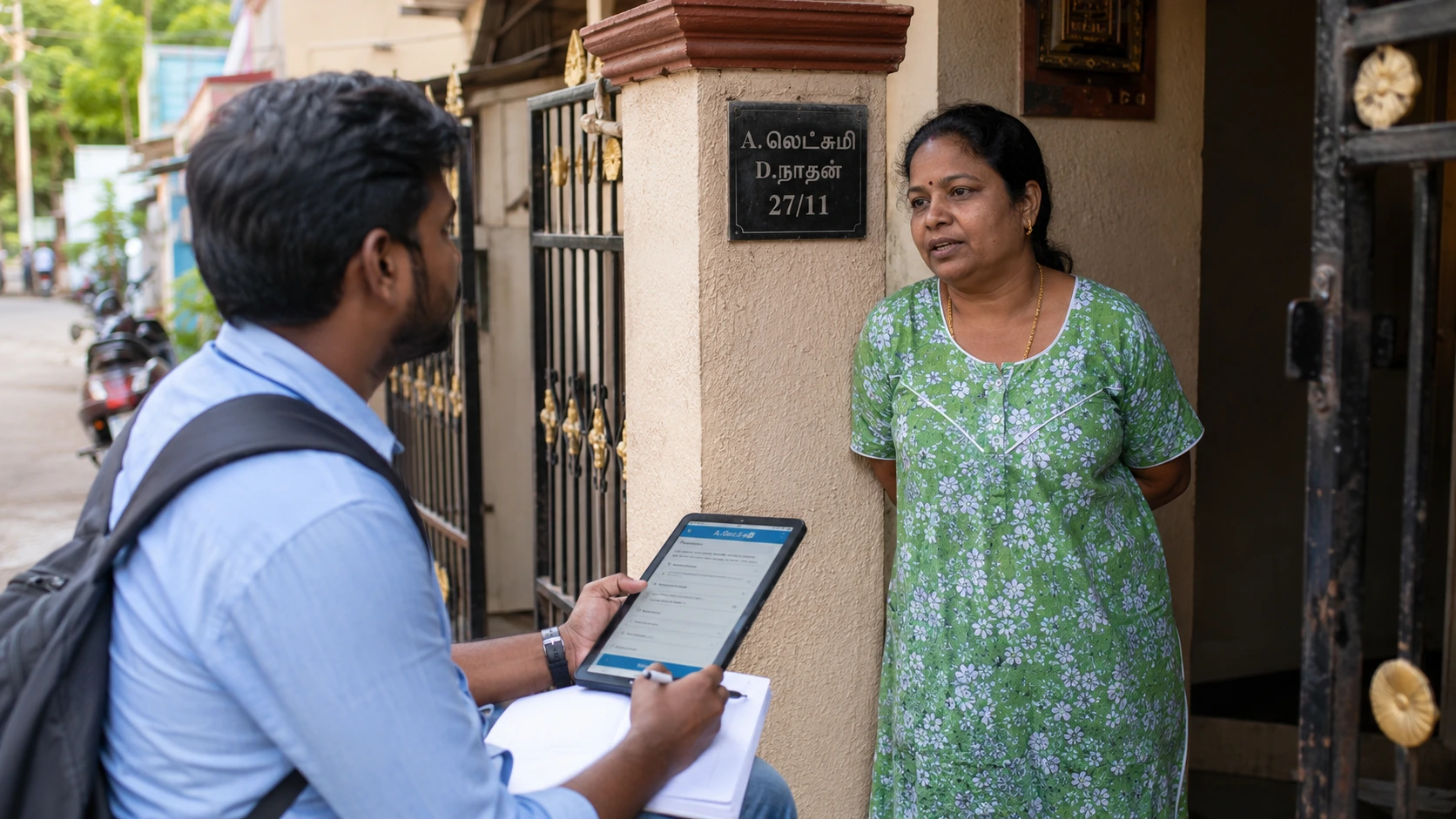
If you’ve searched for “political critic survey,” you’ve probably noticed something odd: there’s no single, agreed-upon definition anywhere. It isn’t a term used in academic political science, and India’s established survey bodies don’t formally define it either.
What’s actually happening is that the phrase has become informal shorthand — used by candidates, campaign teams, and some political consulting firms — for a specific kind of research: understanding how a candidate is perceived negatively, not just how popular they are overall. That’s a real and useful distinction, even if the label itself is loose.
This guide explains what a “political critic survey” actually refers to in practice, how it differs from a standard opinion poll, and when a campaign should commission one. For the survey methodology ThinkPolitically actually runs in Tamil Nadu constituencies, see our political survey services page.
What Is a Political Critic Survey?
A “political critic survey,” as the term is used informally in India, refers to research focused on a candidate’s perceived weaknesses — local grievances against them, negative rumours in circulation, and specific criticisms voters raise unprompted. It isn’t a formally standardised research category; it’s a working label for what professional political research firms describe as a perception audit.
According to industry descriptions of Indian political consulting services, perception audits are designed specifically to identify misinformation trends and voter doubts, so a campaign can proactively craft corrective narratives before those doubts harden into fixed opinion. That’s a materially different goal from asking “who are you planning to vote for?”
How Is a Critic Survey Different From a Standard Opinion Poll?
A standard opinion poll asks who voters currently support and tries to project an outcome. A critic-survey-style perception audit asks a narrower, more diagnostic question: what, specifically, do voters hold against this candidate — and how widely is it believed?
Opinion poll: aggregate and forward-looking
Standard polling — the kind run by bodies like Lokniti-CSDS in its National Election Studies, conducted around Lok Sabha elections since 1996 — samples broadly across a constituency or state to measure vote intention, party preference, and issue priorities at an aggregate level.
Perception/critic survey: candidate-specific and diagnostic
A perception-focused survey narrows in on one candidate (often the client, sometimes an opponent) and probes specific, named concerns: local governance complaints, personal reputation issues, or a rumour that’s spreading on WhatsApp. The output isn’t a vote-share projection — it’s a ranked list of vulnerabilities to address.
Why Does Negative Perception Need Its Own Research Category?
There’s a real behavioural-science reason perception research treats negative attributes separately from positive ones, rather than just running one survey and reading off both ends of the scale.
Academic research on candidate evaluation has documented a positive-negative asymmetry: studies on how voters judge political profiles found that people differentiate more sharply between positive options than between negative ones, and that beyond a certain threshold of negativity, additional negative information stops moving perception much further. In other words, one damaging rumour and three damaging rumours may land almost identically in a voter’s mind — which is precisely why campaigns need to know which specific criticism to address first, not just how “negative” overall sentiment has become.
ThinkPolitically field observation: In constituency research we’ve conducted across Tamil Nadu, we’ve consistently found that a candidate’s three or four most-cited local criticisms are known to campaign volunteers informally, well before any formal survey — but volunteers rarely rank them by how many voters actually believe each one. That ranking, not the raw list, is what a proper perception audit adds.
What Does a Political Critic Survey Actually Measure?
A well-run perception/critic survey for an Indian constituency typically covers:
- Named local grievances — specific, recallable complaints tied to the candidate or incumbent (a delayed project, a local dispute, a past controversy)
- Rumour and misinformation tracking — what’s circulating on WhatsApp, local cable news, or word of mouth, and how widely it’s believed
- Comparative perception — how the candidate’s negatives compare to an opponent’s, not in isolation
- Demographic and geographic spread — whether a criticism is concentrated in specific booths, castes, or age groups, or spread evenly
This is close in spirit to the constituency-level, booth-aware research ThinkPolitically runs as part of broader voter analysis in Tamil Nadu — perception mapping is one layer of a fuller constituency intelligence picture, not a standalone product most firms sell separately.

When Should a Campaign Commission a Perception/Critic Survey?
Early in the campaign cycle
Ideally 6-9 months before polling day, so there’s time to actually address what the research finds — through local outreach, corrective communication, or policy commitments — rather than just documenting problems too late to fix them.
After a specific incident or rumour surfaces
If a specific controversy or piece of misinformation starts circulating, a quick, narrow perception check can tell a campaign whether it’s actually moving voter sentiment or confined to a small, vocal group — before deciding whether a public response is even necessary.
Before finalising campaign messaging
Knowing your three or four most-believed negatives lets a campaign design messaging that addresses them directly, rather than running a generic positive campaign that never engages with what voters are actually saying. Full campaign design around this kind of research is covered in our election campaign management service.
Want to Know What Voters Are Actually Saying About You?
ThinkPolitically runs constituency-level perception research across Tamil Nadu — mapping local grievances, tracking misinformation, and ranking vulnerabilities so your campaign knows what to address first.
Frequently Asked Questions
Is “political critic survey” an official research term?
No. It has no standardised definition in academic political science or among India’s established survey bodies. It’s informal shorthand used by some candidates and consultants for what professional firms more precisely call a perception audit or vulnerability research exercise.
What’s the difference between a critic survey and an opinion poll?
An opinion poll measures aggregate vote intention and party preference across a constituency. A critic/perception survey narrows in on one candidate’s specific perceived weaknesses, ranking which criticisms are most widely believed rather than projecting an overall result.
How is negative perception different from positive support, from a research standpoint?
Academic research on candidate evaluation has found a positive-negative asymmetry, where voters differentiate more sharply between positive attributes than negative ones. This is part of why professional research treats vulnerability mapping as a distinct exercise, not just the negative end of a favourability poll.
Who runs credible political survey research in India?
Lokniti-CSDS has run the National Election Studies around Lok Sabha elections since 1996 and is India’s longest-running academic election survey program. Political consulting firms also run constituency-specific research, though methodology and rigour vary considerably between providers.
When is the right time to commission perception research for a Tamil Nadu campaign?
Ideally 6-9 months before polling day, so findings can actually shape messaging and local outreach. A narrower, faster check can also be run reactively if a specific rumour or controversy surfaces mid-campaign.
Conclusion
“Political critic survey” is a label, not a formal methodology — and that’s worth knowing before you go looking for one. What you actually want, in most cases, is a perception audit: a structured, constituency-specific look at which criticisms of your candidacy voters actually believe, ranked by how many people hold them and how they’re spread across your constituency.
Treat the label loosely and the underlying research seriously. Knowing your three biggest perceived weaknesses, ranked and mapped by booth, is worth far more than a generic sense that “some people don’t like the candidate.”
→ Read next: 2026 Tamil Nadu Election Results — Constituency-by-Constituency Analysis
Sources
- Lokniti-CSDS, National Election Studies, retrieved 2026-07-01, https://www.lokniti.org/national-election-studies
- Political consulting industry overview, “Research and Survey Strategies for Political Campaigns in India,” retrieved 2026-07-01, https://politicalpartyregistration.co.in/research-survey-strategies-political-campaigns-india/
- National Center for Biotechnology Information (PMC), “Positive-Negative Asymmetry in the Evaluations of Political Candidates,” retrieved 2026-07-01, https://www.ncbi.nlm.nih.gov/pmc/articles/PMC5835317/
- National Center for Biotechnology Information (PMC), “Is good more alike than bad? Positive-negative asymmetry in the differentiation between options,” retrieved 2026-07-01, https://www.ncbi.nlm.nih.gov/pmc/articles/PMC9368193/
- ThinkPolitically constituency research — Tamil Nadu campaigns (proprietary observation)