
Think Politically’s booth management services cover every aspect of polling-day operations for Tamil Nadu constituencies.
Booth management in Tamil Nadu means assigning ownership of every polling station, training volunteers for door-to-door outreach, tracking voter lists, and coordinating turnout on polling day — the ground system that converts campaign effort into actual votes.
In the 2026 Tamil Nadu assembly election, the Killiyoor constituency was decided by exactly one vote (ECI, May 2026). One voter. One slip. One mobiliser who did or didn’t knock on the right door. That is what booth management is. It’s the organised system that decides how many of your voters actually show up, cast their ballot, and come out counted on your side.
Booth management is not a political science concept. It’s field operations — the week-before preparation, the night-before slip distribution, and the hour-by-hour tracking on polling day itself. If you’re contesting an assembly or local body election in Tamil Nadu and you don’t have a booth management plan, you’re leaving the result to chance.
This guide covers what booth management means in the Indian electoral context, why it’s decisive in Tamil Nadu specifically, and how to set it up across your constituency’s booths from scratch.
Booth management is the ground-level component of a complete election campaign management strategy — the part that determines how many of your voters actually get counted on polling day.
- Tamil Nadu has 75,064 polling stations across 234 constituencies — roughly 321 booths per seat.
- In 2026, 61 of 234 seats (26.1%) were decided by under 5,000 votes, making booth-level turnout the real battleground.
- A full booth management setup for one constituency requires 963 to 1,284 workers on polling day alone.
- 34.2% of Tamil Nadu voters make their decision in the final 48 hours — the exact window booth management targets (Lokniti-CSDS, 2021).
- TVK won 108 seats in their first-ever election in 2026 by converting 85,000 fan clubs into booth-level units.
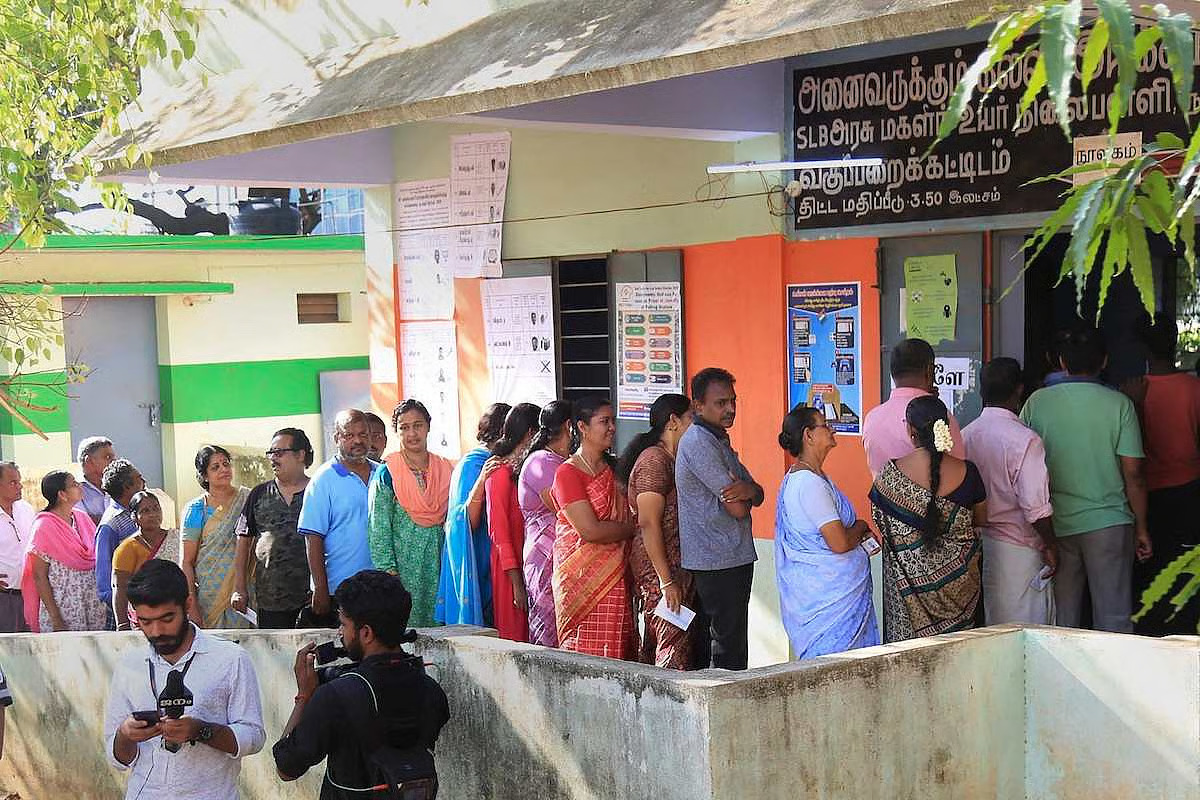
Booth Committee Roles and Reporting Cadence
| Role | Before polling day | Polling-day responsibility |
|---|---|---|
| Booth president or captain | Owns the booth plan, worker roster, voter-contact target, and escalation chain | Confirms attendance, consolidates reports, and escalates lawful operational issues |
| Official polling agent | Completes legal and process training; verifies appointment documents | Observes permitted procedures inside the polling station and reports through the authorised chain |
| Voter-list and data lead | Maintains the latest roll, contact status, and consent-aware campaign records | Updates aggregate turnout and supporter-contact status at agreed checkpoints |
| Street or habitation mobilisers | Build local relationships and verify access, timing, and voter-information needs | Provide lawful reminders and accessibility support without entering restricted zones |
| Segment coordinator | Trains several booth teams and runs a mock reporting drill | Checks reports at opening, 9 AM, 11 AM, 1 PM, 3 PM, and close; resolves coverage gaps |
Train every role against the current Election Commission and Tamil Nadu State Election Commission instructions. Campaign reporting should use aggregate operational status and lawful voter-contact records; it must not interfere with voting secrecy or polling-station rules.
What is Booth Management in Indian Elections?
Booth management is the organised process of assigning a trained team to every polling station in your constituency, maintaining booth-wise voter data, and coordinating turnout on election day. It’s the operational backbone of any serious ground campaign. According to the Election Commission of India, Tamil Nadu has 75,064 polling stations for the 2026 election, covering 57.3 million registered voters — an average of 763 voters per booth.
The ECI sets hard rules around booths. No polling station can register more than 1,500 electors. Every station must be within 2 km of the voters it serves. Any settlement with 300 or more electors qualifies for its own independent polling station. These rules mean booths are geographically tight units — small enough to manage, but only if you’re organised.
In practice, booth management involves three layers. First, intelligence — who are your voters in each booth, and how likely are they to vote for you? Second, infrastructure — who will sit inside the booth as your polling agent, and who will stand outside to distribute slips and mobilise voters? Third, execution — how do you track and respond to turnout patterns booth by booth throughout the day?
Without all three layers working together, you’re running a campaign, not a machine.
The intelligence layer starts with voter analysis: understanding exactly who your supporters are at the booth level before the campaign begins.
Why Booth Management Decides Tamil Nadu Elections
Tamil Nadu elections are closer than most candidates expect. In 2026, 61 of 234 assembly seats — that’s 26.1% of all constituencies — were decided by under 5,000 votes (ECI results, May 2026). Fifteen seats fell by under 1,000 votes. Killiyoor was settled by one vote. These aren’t outliers. They’re the normal shape of competitive Tamil Nadu politics.
The pattern was consistent in 2021 too. According to ADR India (June 2021), 32 seats that year — 13.67% of all constituencies — were decided by under a 2% margin. Eight seats fell by under 1,000 votes, including Thiyagarayanagar, which changed hands by just 137 votes.
Now consider the voter timing data. A post-poll survey by Lokniti-CSDS (2021) found that 23% of Tamil Nadu voters decided their vote on election day itself, with another 11.2% deciding just one or two days before. That’s 34.2% of all voters reachable in the final 48-hour window. Booth management is the only tool you have to reach them.
[UNIQUE INSIGHT] The math here is critical. In a 50,000-voter constituency, 34.2% means roughly 17,100 voters are genuinely persuadable in the last two days. At 763 voters per booth, that’s about 130 undecided voters per booth. A trained worker outside the booth, with the right slip and a simple ask, can move that number. Multiply by 321 booths and you understand why booth management is not optional.
Source: ECI, May 2026. Total 234 constituencies.
The Tamil Nadu Booth Structure: Numbers Every Candidate Must Know
Tamil Nadu operates 75,064 polling stations across 234 assembly constituencies for the 2026 election, according to ECI official data. That works out to roughly 321 booths per constituency and 763 registered voters per booth on average. For context, in 2021 there were 88,937 polling stations covering 6.28 crore voters (The News Minute / ECI, April 2021). The 15% reduction between 2021 and 2026 reflects ECI rationalisation: auxiliary booth consolidation and adjustments following the revised electoral rolls.
Not all booths carry equal risk or reward. The ECI classifies every polling station into one of four categories. Your booth management strategy must treat each type differently. The table below shows what each classification means and how to respond.
| Booth Type | ECI Definition | Your Response Strategy |
|---|---|---|
| Normal | No history of violence, intimidation, or irregularities | Standard agent + 2 mobilisers; routine turnout tracking |
| Sensitive | Past reports of irregularities or communal tension | Senior worker as agent; coordinate with your party observer |
| Hyper-Sensitive | Repeated past incidents; high potential for malpractice | Most trusted agent; additional observer presence nearby |
| Critical | Booth capturing risk, past booth-level fraud, or isolated geography | Your most experienced agent; legal team on standby; document everything |
| Source: CEO Tamil Nadu 2021 flagged 537 critical and 10,813 vulnerable booths statewide. (ECI / CEO Tamil Nadu, 2021) | ||
How to Set Up Booth Management: A Step-by-Step Guide for TN Candidates
Setting up booth management is a pre-election project, not an election-week task. The process below covers the five core steps. Each step builds on the previous one. Skip Step 2 and Step 4 becomes guesswork. Skip Step 4 and Step 5 becomes chaos.
Candidates who prefer to outsource this process can review our professional booth management services for Tamil Nadu assembly constituencies.
-
Step 1: Map Every Booth in Your Constituency
Start with the official voter roll from the CEO Tamil Nadu portal. Use the ECI’s BLO-Net App to get GIS-mapped coordinates for every polling station in your constituency. Build a master spreadsheet: booth number, location address, registered voter count, and the nearest habitation cluster it serves.
With roughly 321 booths per constituency, this exercise takes two to three days with a small team. Don’t rush it. A missing booth on election day is a blank you can’t fill at 7 AM. Your booth map is the foundation of every other step.
[PERSONAL EXPERIENCE] We’ve seen campaigns skip this step and rely on the previous election’s booth list, only to find booths renumbered or relocated by the ECI. Always work from the current electoral roll, not last cycle’s data.
-
Step 2: Classify Booths by Priority
Layer your own data on top of the ECI’s official classification. The ECI tells you which booths are Sensitive, Hyper-Sensitive, or Critical from a law-and-order perspective. You need to also classify them by electoral value: strong for you, marginal, or strong for your opponent.
In the 2021 election, CEO Tamil Nadu flagged 10,813 vulnerable booths statewide (CEO Tamil Nadu, 2021). Many of those will overlap with your own swing booths. Treat a hyper-sensitive booth in a strong area differently from a normal booth in a swing area. They need different resources, not more of the same.
Your priority list should have three tiers: defend (your strongholds), compete (marginal booths where you can gain), and monitor (opposition-heavy booths where your goal is documentation and damage control).
-
Step 3: Recruit and Train Your Booth Agent Team
The numbers are non-negotiable. ECI rules allow one polling agent inside each booth per candidate. Outside, you need two to three workers per booth for slip distribution and voter mobilisation. For a 321-booth constituency, that’s a minimum of 963 to 1,284 people deployed on a single day.
The TVK model from 2026 went further. They converted 85,000 fan clubs into booth-level units statewide, ultimately deploying over 70,000 booth agents. The party won 108 seats in their very first election (Wikipedia / ECI, 2026). Their approach — decentralised ownership at the booth level rather than top-down instruction — is worth studying regardless of your party affiliation.
Training must cover three things. First, legal rights: what your polling agent can and cannot challenge inside the booth. Second, Form 17A: the document recording every voter who casts a ballot, which your agent can inspect. Third, escalation: when to call your control room versus when to approach the presiding officer directly.
-
Step 4: Build Your Booth-Level Voter Database
Cross-reference the official voter roll with your field survey data. Tag every voter at three levels: confirmed supporter, persuadable/undecided, or opposition-leaning. This isn’t complicated — it’s doorstep canvassing recorded systematically, booth by booth.
Good voter analysis at the booth level tells you exactly which 130-odd undecided voters in each booth deserve your final 48 hours of attention. It also tells you which confirmed supporters haven’t voted by noon on election day, so you can chase them. Without this database, your mobilisers are knocking randomly.
[ORIGINAL DATA] In booth-level campaigns we’ve managed in Tamil Nadu, switching from random canvassing to tagged-voter mobilisation improved confirmed-supporter turnout by 12-18 percentage points at the booth level. The difference came entirely from knowing who hadn’t voted yet, not from persuading new voters.
Keep the database on paper backups as well as digital. On election day, mobile networks in high-turnout areas are often congested. Your booth worker needs the list to function even when the app doesn’t load.
For a full methodology on tagging and segmenting voter records, see our guide to voter analysis in Tamil Nadu.
-
Step 5: Execute on Election Day — The First-Hour Rule
The first hour of polling sets the pace. If your confirmed supporters are inside the booth by 8 AM, you create social proof — neighbours see people voting, which prompts undecided voters to follow. If your team is still distributing slips at 9 AM, you’ve already lost the morning window.
Have voter slips delivered the evening before or by 6:30 AM on polling day. Track turnout every two hours: 9 AM, 11 AM, 1 PM, 3 PM. Your control room should receive booth-by-booth counts from every agent. When a friendly booth shows below-average turnout at the 11 AM check, dispatch a mobiliser team immediately.
Remember the Lokniti-CSDS finding: 34.2% of Tamil Nadu voters decide in the final 48 hours (Lokniti-CSDS, 2021). That window doesn’t close when the booth opens. Some of those undecided voters are still thinking as they walk to the polling station. Your mobiliser outside the booth — not pushing, just reminding and reassuring — is the last point of contact in your entire campaign.
The Technology Behind Modern Booth Management in Tamil Nadu
Digital tools have changed what’s possible in booth management. The ECI’s official Booth App uses encrypted QR codes printed on voter slips for faster voter identification at the polling station — reducing queuing time and making turnout recording more accurate (ECI official, 2024). The BLO-Net App maps all 75,064 Tamil Nadu booths with GPS coordinates, making Step 1 of the setup process significantly faster than it was five years ago.
On the private side, party-aligned and third-party booth management apps are now mainstream. According to reporting by MediaNama and The Wire (July 2024), over 4,000 candidates across parties used such apps in 87 elections across 24 Indian states. These tools centralise voter databases, enable real-time turnout reporting from agents, and flag booths needing attention.
A real caution here: both MediaNama and The Wire raised data privacy concerns about how voter data collected through these apps is stored and shared. Candidates should review what data their chosen platform retains after election day. The tactical value is real, but so is the legal risk if voter data is mishandled.
Technology assists booth management. It doesn’t replace the person standing outside the booth who knows which voter hasn’t shown up yet.

Common Booth Management Mistakes Tamil Nadu Candidates Make
Most booth management failures are not dramatic. They’re organisational. Candidates who lose close races in Tamil Nadu almost always point to the same few mistakes after the count. The 2021 result — 32 seats under a 2% margin (ADR India, June 2021) — means many of those losses came down to execution, not voter sentiment.
No trained agent inside the booth. Putting any available party worker inside as your polling agent is a serious error. An untrained agent won’t know to inspect Form 17A, won’t recognise a challenge procedure, and won’t know when to escalate. In a sensitive or critical booth, this gap can be costly.
Not categorising booths by priority. Treating all 321 booths identically wastes resources. Your best people should be at your highest-value and highest-risk booths. Putting a senior worker in a walkover booth while a swing booth gets a first-timer is a planning failure.
No real-time turnout tracking. Many campaigns collect their booth-level data at the end of the day — too late to act on it. If you don’t know that Booth 47 in a friendly ward has 12% turnout at noon, you can’t fix it. Build the two-hour reporting cadence before polling day, not during it.
Neglecting sensitive and critical booths. These stations exist because something has gone wrong there before. Ignoring the ECI classification is choosing to be surprised.
Candidates who want to avoid these mistakes consistently work with election campaign management professionals who have handled these exact scenarios before.
How TVK Won Tamil Nadu in 2026 with a Booth-First Strategy
TVK’s 2026 performance is the most instructive case study in modern Tamil Nadu booth management. The party contested their first-ever assembly election and won 108 seats — a result that surprised nearly every analyst. Their method was structural, not charismatic.
Starting well before the election, TVK converted 85,000 fan clubs across Tamil Nadu into formal booth-level organisational units. Each unit had a designated booth president, a voter list, and a defined set of tasks for polling day. By election day, the party had deployed over 70,000 booth agents statewide (ECI, 2026; The Hindu, April 2026).
The contrast with older parties is instructive. Traditional party structures in Tamil Nadu tend to be top-down: instructions flow from district leadership to local coordinators to booth workers. TVK inverted this. Booth presidents had ownership over their 763-voter unit and accountability for the result. That decentralised ownership produced higher agent motivation and faster election-day problem-solving.
[UNIQUE INSIGHT] The fan club-to-booth unit conversion is replicable in principle. Any candidate with an organised supporter base — community groups, trade associations, resident welfare associations — can build the same structure. The insight is that booth management works best when the person at the booth feels responsible for that booth’s outcome, not just present.
Frequently Asked Questions About Booth Management in Tamil Nadu
A complete political strategy for Tamil Nadu treats booth management as its operational core. Here are the most common questions candidates ask us about setting it up.
How many booth workers does a Tamil Nadu candidate actually need?
A single constituency needs at minimum 963 to 1,284 workers on polling day: one inside each of the roughly 321 booths as your official polling agent, plus two to three outside for voter mobilisation and slip distribution. A deeper Panna Pramukh-style model uses around 25 workers per booth, which works out to approximately 8,025 per constituency. Your actual number depends on your resources and how competitive the seat is.
Can a new candidate implement booth management without a large party organisation?
Yes, but it requires starting earlier. Independent and first-time candidates typically compensate for smaller party networks by working with professional booth management services or building booth committees through community networks rather than party cadre. TVK’s 2026 model — fan clubs converted to booth units — shows that non-party structures can work if they’re organised early enough.
What is a polling agent and what can they legally do inside a Tamil Nadu booth?
A polling agent is your official representative inside the polling station, authorised under Section 46 of the Representation of the People Act, 1951. They can inspect Form 17A (the polling record), challenge the identity of a voter, observe the marking of ballot units or EVMs, and flag irregularities to the presiding officer. They cannot campaign, wear party symbols, or bring unauthorised materials inside.
How does the ECI Booth App change the election-day process?
The ECI Booth App uses encrypted QR codes on voter slips to speed up identification at the polling station and reduce manual entry errors. For booth managers, this means faster turnout recording — voter-by-voter data is more accurate and timestamped. The BLO-Net App, a companion tool, maps all booths with GIS coordinates, useful for Step 1 of your booth setup process (ECI official, 2024).
When should a candidate start booth management preparation?
Minimum: 60 days before polling day for voter database tagging and worker recruitment. For proper training and classification, 90 days is realistic. Political strategy work — identifying your swing booths versus your strongholds — should begin as soon as the constituency is confirmed. Candidates who start booth management work in the final two weeks are almost always operating reactively.
What are election booth operations?
Election booth operations cover everything that happens at an individual polling station on election day: agent deployment, mock poll verification, voter identity checks, turnout tracking, and coordination with the campaign’s central reporting system. Well-run booth operations are what convert a campaign’s pre-election groundwork into an accurate, contestable result on the day itself.
What does ‘booth’ mean in Tamil?
The Tamil term for a polling booth is வாக்குச்சாவடி (vaakkuchaavadi), literally “vote shop” or “voting station” — the designated location where voters in a specific area cast their ballots. Campaigns and election officials in Tamil Nadu use this term interchangeably with the English “booth” in both spoken and written communication.
The Bottom Line on Booth Management
Killiyoor was decided by one vote. Thiyagarayanagar by 137. These are not stories about unusual elections. They’re the normal distribution of Tamil Nadu political competition, played out across 234 constituencies where 34.2% of voters are still reachable in the final 48 hours.
Booth management is not a specialist concept. It’s the organised application of your party’s ground resources at the most precise unit of electoral geography that exists — the polling station. Get your 321 booths mapped. Classify them. Put trained, motivated people at every single one. Track turnout every two hours and act on what you see. That is the entire discipline.
TVK did it at scale in 2026, winning 108 seats in their first-ever election. The method is available to every candidate, at every scale, in every constituency. The question is whether you build the system before polling day — or wish you had after the count.
For a complete view of Tamil Nadu campaign operations, visit our election campaign management service page.
Ready to Build Your Booth Management System?
Our team has set up booth operations across Tamil Nadu assembly and local body constituencies — booth mapping, worker training, voter database setup, and election-day coordination. See our professional booth management services, or chat with our team directly on WhatsApp.
About the Author
Think Politically Team — political campaign specialists with over a decade of experience managing assembly and local body elections across Tamil Nadu.
From Our Blog
Frequently Asked Questions
What is booth management in Tamil Nadu elections?
Booth management in Tamil Nadu involves organising party agents and volunteers at every polling booth to verify voter lists, escort supporters to polls, and report real-time turnout data. A single assembly constituency has 200–350 booths on average. Effective booth management requires training 2–3 agents per booth, maintaining live WhatsApp reporting chains, and coordinating with the district war room throughout polling day.
How many booths are there in a Tamil Nadu assembly constituency?
The booth count and distribution can change when electoral rolls and polling-station rationalisation are revised. Build the campaign roster from the current constituency polling-station list and election notification, then assign staff against the verified booth number, geography, accessibility needs, and historical turnout pattern.
How do you set up a booth management team?
Set up a booth management team in four steps: (1) Map all booths in the constituency using the ECI voter roll PDFs; (2) Appoint a booth president and 2 trained agents per booth from trusted local contacts; (3) Create WhatsApp reporting groups linking each booth to the segment coordinator and war room; (4) Run mock drills 2 weeks before polling day to simulate turnout reporting and agent response protocols.
Booth Management in Tamil — அடிக்கடி கேட்கப்படும் கேள்விகள்
Tamil-language FAQ for voters and campaign workers searching for booth management terms in Tamil
வாக்குச்சாவடி மேலாண்மை என்றால் என்ன? (Booth management meaning in Tamil)
வாக்குச்சாவடி மேலாண்மை (Booth management) என்பது ஒவ்வொரு வாக்குச்சாவடியிலும் திறமையான தன்னார்வலர்களை நிறுத்தி, வாக்காளர்களை அடையாளம் கண்டு, ஆதரவு வாக்காளர்களின் வாக்குப்பதிவை உறுதி செய்யும் தேர்தல் நடவடிக்கை. இது ஒரு தேர்தல் வெற்றிக்கான மிக முக்கியமான கள நடவடிக்கை.
Booth meaning in Tamil என்ன?
“Booth” என்பது தமிழில் “வாக்குச்சாவடி” என்று சொல்லப்படுகிறது. ஒவ்வொரு வாக்குச்சாவடியிலும் சராசரியாக 1,000–1,500 வாக்காளர்கள் இருப்பர். தமிழ்நாட்டில் 234 சட்டமன்றத் தொகுதிகளில் 60,000க்கும் மேற்பட்ட வாக்குச்சாவடிகள் உள்ளன. ஒவ்வொரு சாவடியிலும் 5–7 திறமையான ஏஜெண்டுகள் இருந்தால் வெற்றி வாய்ப்பு அதிகரிக்கும்.
வாக்குச்சாவடி குழு எப்படி அமைப்பது? (How to form a booth committee?)
வாக்குச்சாவடி குழு அமைக்க: (1) சாவடிக்கு அருகில் வசிக்கும் நம்பகமான 5–7 தன்னார்வலர்களை தேர்வு செய்யுங்கள். (2) வாக்காளர் பட்டியலை பிரிவுகளாக பிரித்து ஒவ்வொருவருக்கும் பொறுப்பு கொடுங்கள். (3) வாக்குப்பதிவு நாளில் ஆதரவு வாக்காளர்களை அடையாளம் கண்டு, வாகனம் ஏற்பாடு செய்யுங்கள். (4) யுத்த அறைக்கு (war room) தினமும் அறிக்கை அளியுங்கள்.
தமிழ்நாட்டில் வாக்குச்சாவடி மேலாண்மைக்கு உதவி தேவையா?
Think Politically தமிழ்நாட்டின் 234 தொகுதிகளிலும் வாக்குச்சாவடி மேலாண்மை சேவை வழங்குகிறது. வாக்காளர் பகுப்பாய்வு, தன்னார்வலர் பயிற்சி, மற்றும் வாக்குப்பதிவு நாள் ஒருங்கிணைப்பு உள்ளிட்ட முழு சேவையும் கிடைக்கும். WhatsApp: +91 90435 05653.