- Social media lets politicians reach voters directly, without a newspaper editor or TV producer deciding what gets covered, which is why it’s become central to Indian campaigning at every level.
- India’s political social media reality is WhatsApp-first: WhatsApp reaches roughly 84.6% of India’s internet users, more than any other platform, which changes what “social media strategy” should actually mean here compared to Western, X/Facebook-centric advice.
- Since April 2026, the Election Commission requires any AI-generated or digitally-altered campaign content to be clearly labelled, with platforms required to act on reported violations within three hours.
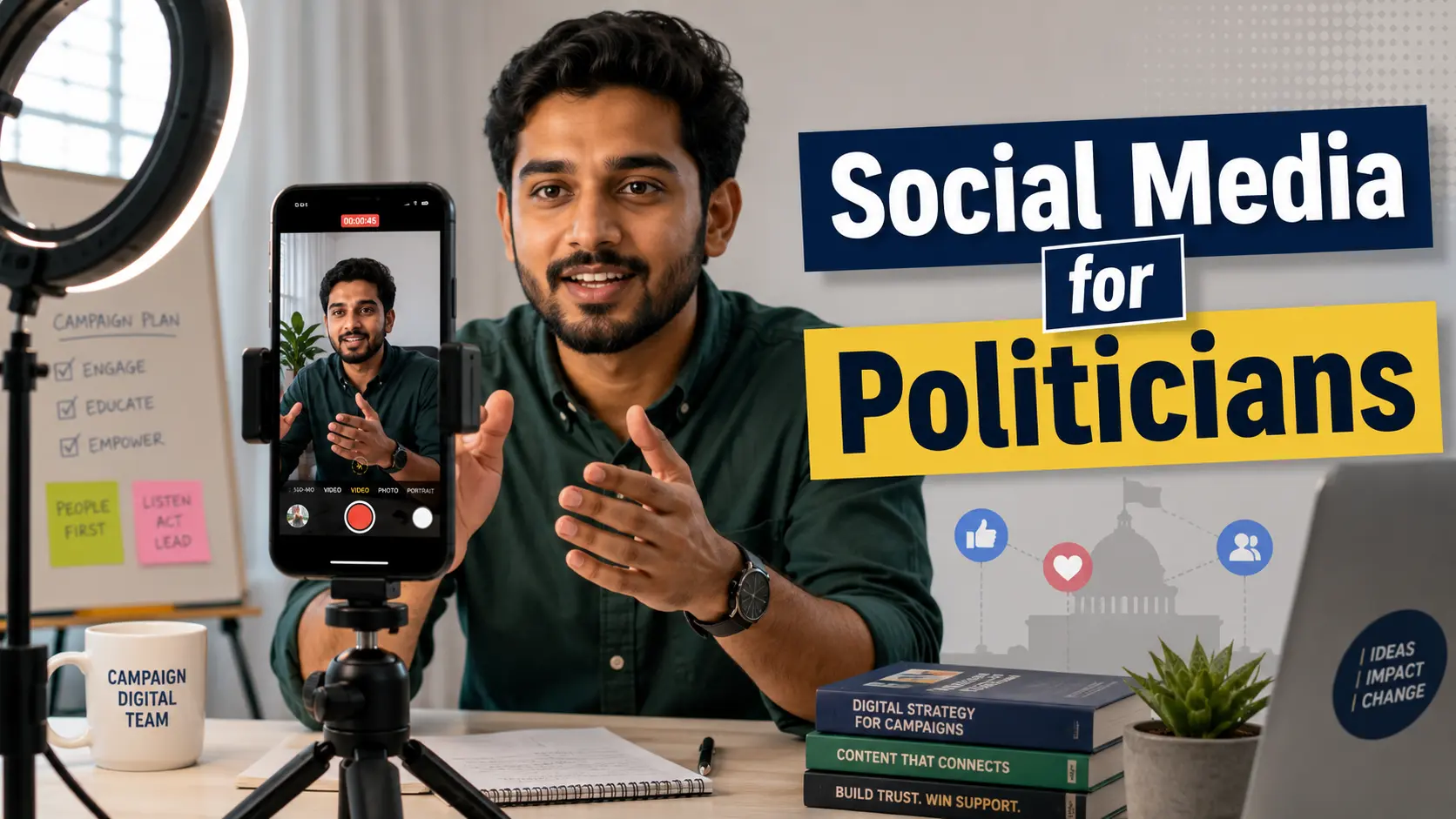
Social media has become central to how political campaigns in India communicate, and it’s easy to see why: a candidate can now reach thousands of voters directly, on a platform they already check daily, without needing a newspaper editor or TV news producer to decide the message is worth covering. That shift has changed campaigning at every level, from national parties to first-time panchayat candidates.
Most advice on this topic is written for U.S. or European campaigns and assumes a Facebook-and-X-centric media environment. India’s reality is different, and understanding that difference is the first step to using social media effectively rather than just being present on it.
Why Do Politicians Use Social Media?
Politicians use social media because it lets them communicate with voters directly, at low cost, without depending on traditional media gatekeepers to decide what gets covered and how. Three reasons drive this in practice:
- Direct reach: A message posted on a candidate’s own account reaches followers without being filtered, summarised, or reframed by a journalist or editor first.
- Cost efficiency: Building an audience on social media costs far less than sustained television or print advertising, which matters enormously for local body and first-time candidates without a national party’s media budget.
- Real-time narrative control: When a controversy or attack breaks, a candidate with an established social media presence can respond within hours instead of waiting for the next news cycle or press conference.
How Social Media Influences Political Campaigns in India
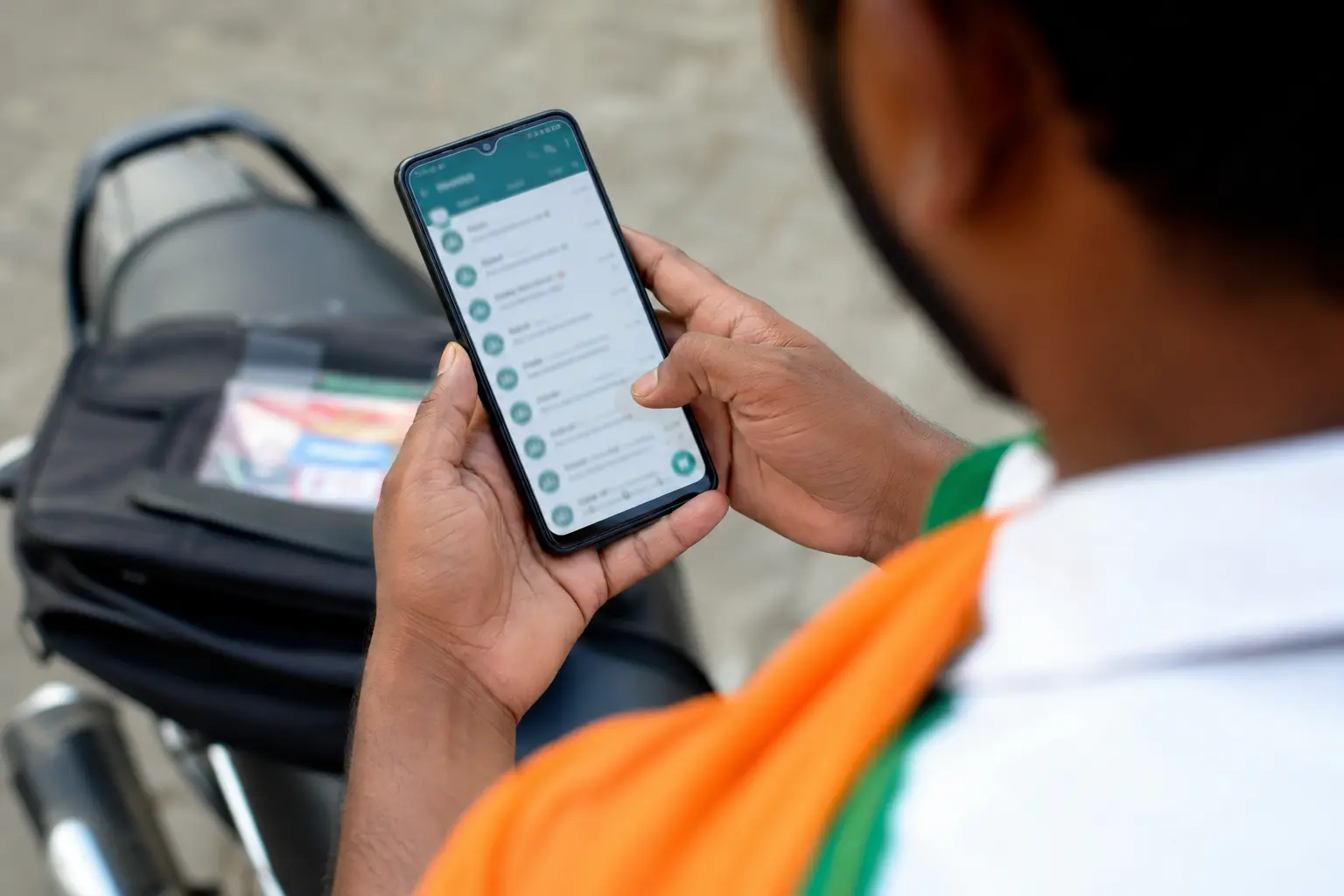
India’s social media landscape looks different from the platforms most global “social media for politics” advice assumes. WhatsApp, not X or Facebook, is the dominant channel: it reaches an estimated 84.6% of India’s internet users, more than any other platform in the country. For political campaigns, that means last-mile voter outreach, daily messaging, turnout reminders, local updates, runs largely through WhatsApp broadcast groups and forwards, not public posts.
Layered on top of that WhatsApp-first reality: regional-language content consistently outperforms English-language messaging outside major metros, and creator/influencer involvement in political content has grown sharply, with short-form video (Reels, Shorts) increasingly shaping how younger voters encounter campaign messaging in the first place.
Practical implication: A social media strategy built around X/Twitter engagement metrics, the default in most Western campaign advice, will systematically undercount what’s actually moving Indian voters. WhatsApp reach and regional-language short-form video are the more relevant signals for most Indian constituencies.
We’ve written in more depth about what this looks like on the ground in Tamil Nadu specifically: see our WhatsApp political campaign strategy guide.
What Does Political Social Media Management Actually Involve?
“Political social media management” covers more than posting on a schedule. In practice, it’s five ongoing functions:
- Content calendar and platform-specific strategy: WhatsApp broadcast content, YouTube/Instagram Shorts, and Facebook posts each need different formats and cadence, not one piece of content repurposed identically everywhere.
- Community management: Responding to comments, messages, and questions, which for an active campaign account can mean hundreds of interactions a day.
- Rapid-response and crisis monitoring: Tracking what’s being said about the candidate in real time, so a response to a false claim or attack goes out in hours, not days.
- Compliance: Since April 2026, the Election Commission requires any AI-generated or digitally-altered campaign content, an edited video, a synthetic voice clip, an AI image, to be clearly labelled as such, with the originating entity disclosed; platforms are required to act on reported violations within three hours. A social media manager who isn’t tracking this is exposing the campaign to real regulatory risk, not just a bad look.
- Reporting: Candidates must disclose their official social media accounts in their nomination affidavits, which means account ownership and activity need to be documented and consistent from well before nomination day.
Do You Need a Social Media Manager for Your Political Campaign?
For a small local body campaign with a candidate who’s comfortable posting consistently and responding to comments personally, self-managed social media can be enough, especially in the early phase of a campaign. The point where it stops being enough is usually when one or more of these happens: posting becomes inconsistent because the candidate is busy with field campaigning, a crisis or attack requires a same-day response the candidate can’t personally manage while also campaigning on the ground, or the campaign scales to assembly or Lok Sabha level, where the volume of content and interactions genuinely requires a dedicated person or small team.
If you’re evaluating outside help for the advertising and paid-media side specifically, as distinct from day-to-day account management, see our guide to political ad and marketing agencies in India, which covers what that service actually includes and how to evaluate one.
Want a WhatsApp-First Social Media Plan?
Our digital campaign work is built around how Indian voters actually use social media, WhatsApp-first, regional-language, tied to the ground campaign, not a generic content calendar. See our political branding work or talk to us directly.
Frequently Asked Questions
Why is social media important for politics?
Social media lets politicians and parties communicate directly with voters without a news editor or TV producer deciding what gets covered, at a fraction of the cost of traditional advertising. It also allows real-time response to controversies, which traditional media cycles don’t support.
What does a social media manager for a political campaign do?
A political social media manager runs the content calendar across platforms, manages community responses, monitors for attacks or misinformation requiring rapid response, and ensures compliance with Election Commission rules, including the labelling requirement for AI-generated content introduced in April 2026.
What is a social media political campaign strategy?
A social media political campaign strategy is a plan for which platforms to prioritise, what content to post and how often, and how community management and crisis response are handled, calibrated to how voters in that specific constituency actually use social media. In most of India, that means prioritising WhatsApp and regional-language short-form video over the X/Facebook-centric approach assumed by most generic social media advice.
Conclusion
Social media matters for Indian politicians because it offers direct, low-cost, real-time communication with voters, but doing it well means working with India’s actual platform landscape (WhatsApp-first, regional-language, increasingly short-form video) rather than importing a strategy built for a different country’s media environment. It also means treating compliance, account disclosure, AI-content labelling, as a real operational requirement, not an afterthought.
→ Read next: WhatsApp Political Campaign Strategy: A Tamil Nadu Guide
Sources
- GrabOn / NapoleonCat, India social media statistics 2026 — WhatsApp active users (531.46M) and share of India’s internet users (~84.6%).
- DataReportal, “Digital 2026: India” — total social media users and share of population.
- Press Information Bureau (PIB), Election Commission of India, April 2026 — AI-generated/synthetic campaign content labelling requirement and 3-hour platform response window.
- Election Commission of India — candidate social media account disclosure requirement in nomination affidavits.